Mt. Calvary Baptist Church — Oldest Black Church in Fairfax City

Mt. Calvary Baptist Church — Oldest Black Church in Fairfax City

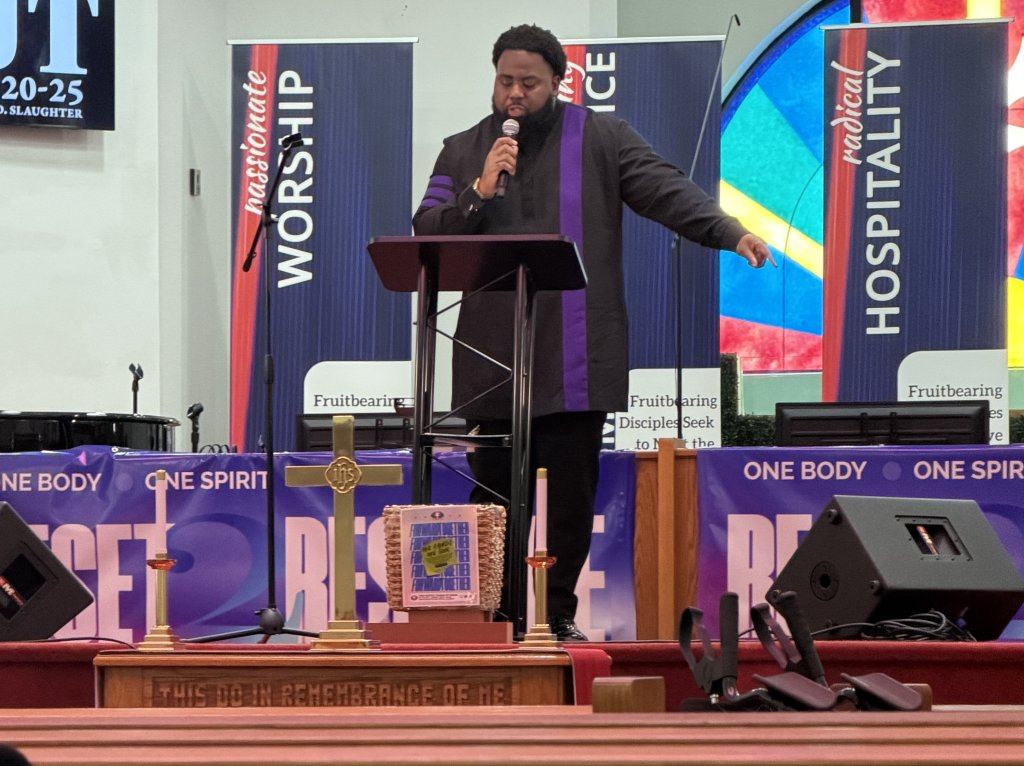
FAIRFAX CITY, Va. — Founded on May 15, 1870, Mt. Calvary Baptist Church stands as one of Fairfax County's most enduring symbols of faith, resilience, and community.

Established by formerly enslaved men and women who settled near the Fairfax County Courthouse after the Civil War, their very first act of freedom was not to build homes for themselves—but to build a house of worship. That powerful commitment became the foundation of a congregation that has faithfully served the community for more than 155 years and during the era of segregation and Jim Crow, Mt. Calvary was much more than a church. It became a vital center for Black civic leadership and the fight for civil rights in Fairfax County.

Originally located near today's Route 123, the congregation moved to its present home on Chain Bridge Road in 1957. A Virginia historical marker nearby commemorates the church's early baptismal site on Accotink Creek, where members were baptized through the 1930s.

📸: absolonkent.net/photogallery/index.php?/category/714


The West Springfield 16 Historical Marker

The West Springfield 16 Historical Marker

WEST SPRINGFIELD, Va. — In front of West Springfield High School stands a marker that reminds us that history is often hidden beneath the places we know best.

An 1856 property inventory for the land where the school currently stands recorded the names, ages, and occupations of 16 enslaved African Americans whose labor sustained the plantation that once occupied this site. While countless enslaved people remain anonymous in the historical record, this rare document preserves the identities of these individuals, ensuring they are remembered as people—not simply as property.

The West Springfield 16 Historical Marker acknowledges a difficult, but essential chapter of Fairfax County's past. It invites students, teachers, and visitors to recognize that today's classrooms stand on land shaped by the lives and labor of enslaved men, women, and children.

By commemorating the West Springfield 16, the marker transforms an ordinary school campus into a place of reflection, remembrance, and learning. It is a powerful example of how public history can honor those whose stories were too often overlooked and help us better understand the foundations of our community. Remembering the West Springfield 16 helps ensure their lives remain part of Fairfax County's story.

📸: absolonkent.net/photogallery/index.php?/category/713


My Annandale: Cat Janice Mural

My Annandale: Cat Janice Mural
ANNANDALE, Va. — Annandale has long been home to talented artists and musicians, and few have touched hearts around the world like Cat Janice.

Born Catherine Ipsan the Annandale native was a singer-songwriter whose music inspired millions. After being diagnosed with a rare form of cancer, she released her final single, Dance Outta My Head, ensuring that all proceeds would support her young son. The song became a global sensation, reaching the top of the TikTok Billboard chart and introducing her remarkable story of love, courage, and resilience to audiences worldwide.

Today, her legacy is being celebrated in Annandale with a beautiful new mural on the side of the Annandale Watch & Clock building at 4221 Annandale Road. The mural depicts Cat singing into a microphone, surrounded by flowers she loved, a star-filled night sky, and the poignant lyric, "I see you in the stars now." The project was inspired by her husband, Kyle Higginbotham, and made possible with the support of her family and the local community.

The mural is more than public art—it is a lasting tribute to an Annandale native whose music, strength, and generosity continue to inspire people around the world.


Luther P. Jackson High School Site

Luther P. Jackson High School Site

FALLS CHURCH, Va. — Before 1954, African American students in Fairfax County who wanted to attend high school had to travel outside the county—either to Manassas or to schools in Washington, D.C. That changed when Luther P. Jackson High School opened in September 1954 as the county's first—and only—high school built to serve African-American students. Named for historian, educator, and voting-rights advocate Luther Porter Jackson, the school became a source of pride and opportunity for generations of students.

Ironically, the school opened the same year the U.S. Supreme Court issued its landmark Brown v. Board of Education decision declaring segregated public schools unconstitutional. Despite the ruling, Luther Jackson opened as a segregated school and remained the county's only school for Black students in grades 7–12 until integration began in 1965.

Today, the building continues to serve the community as Luther Jackson Middle School, while a Fairfax County historical marker commemorates the school's important role in the county's educational and civil rights history.

📸: absolonkent.net/photogallery/index.php?/category/708


Williamstown — Lost African-American Community

Williamstown — Lost African-American Community

FALLS CHURCH, Va. — Before the modern shopping centers and office buildings of Merrifield stood a thriving African-American community known as Williamstown. Established after the Civil War by formerly enslaved people, free Black Virginians, and their descendants along Gallows Road near present-day Merrifield and Dunn Loring, this close-knit, self-sufficient community thrived despite the barriers of segregation and discrimination.

As Black landownership expanded in Fairfax County, families built farms, homes, churches, and charitable organizations, creating a vibrant and resilient community. Williamstown, together with the neighboring communities of Merrifield (then known as Mills Crossing) and The Pines, became an important center of African-American life in Northern Virginia.

By the 1980s, however, decades of eminent domain, suburban development, and commercial expansion—including what is now the Mosaic District and the Merrifield commercial corridor—had erased nearly all physical traces of Williamstown.

Today, the community lives on through oral histories, archival records, and the work of descendants and historians who continue to preserve its story.

📸: absolonkent.net/photogallery/index.php?/category/709