Mt. Calvary Baptist Church — Oldest Black Church in Fairfax City

Mt. Calvary Baptist Church — Oldest Black Church in Fairfax City

FAIRFAX CITY, Va. — Founded on May 15, 1870, Mt. Calvary Baptist Church stands as one of Fairfax County's most enduring symbols of faith, resilience, and community.

Established by formerly enslaved men and women who settled near the Fairfax County Courthouse after the Civil War, their very first act of freedom was not to build homes for themselves—but to build a house of worship. That powerful commitment became the foundation of a congregation that has faithfully served the community for more than 155 years and during the era of segregation and Jim Crow, Mt. Calvary was much more than a church. It became a vital center for Black civic leadership and the fight for civil rights in Fairfax County.

Originally located near today's Route 123, the congregation moved to its present home on Chain Bridge Road in 1957. A Virginia historical marker nearby commemorates the church's early baptismal site on Accotink Creek, where members were baptized through the 1930s.

📸: absolonkent.net/photogallery/index.php?/category/714


Williamstown — Lost African-American Community

Williamstown — Lost African-American Community

FALLS CHURCH, Va. — Before the modern shopping centers and office buildings of Merrifield stood a thriving African-American community known as Williamstown. Established after the Civil War by formerly enslaved people, free Black Virginians, and their descendants along Gallows Road near present-day Merrifield and Dunn Loring, this close-knit, self-sufficient community thrived despite the barriers of segregation and discrimination.

As Black landownership expanded in Fairfax County, families built farms, homes, churches, and charitable organizations, creating a vibrant and resilient community. Williamstown, together with the neighboring communities of Merrifield (then known as Mills Crossing) and The Pines, became an important center of African-American life in Northern Virginia.

By the 1980s, however, decades of eminent domain, suburban development, and commercial expansion—including what is now the Mosaic District and the Merrifield commercial corridor—had erased nearly all physical traces of Williamstown.

Today, the community lives on through oral histories, archival records, and the work of descendants and historians who continue to preserve its story.

📸: absolonkent.net/photogallery/index.php?/category/709


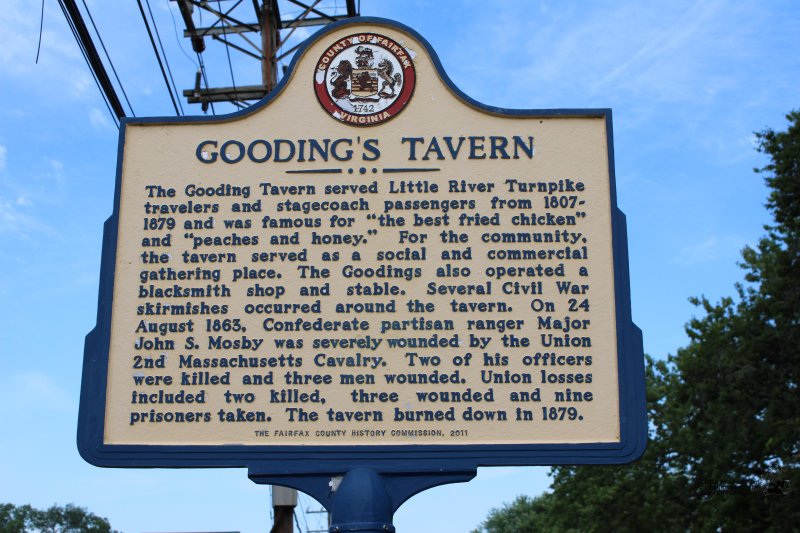
Gooding's Tavern Historical Marker

Gooding's Tavern Historical Marker

ANNANDALE, Va. — Gooding's Tavern was operated by William Gooding Jr. (1768–1861) from 1807 until his death, and by his heirs until the building burned in 1879. Known as the "ten-mile house" because it stood ten miles from Alexandria on the Little River Turnpike, the tavern was famous throughout Northern Virginia for its fried chicken, peaches, and honey and served as a social, commercial, and postal gathering place for the surrounding community. The Goodings also operated a blacksmith shop and stable across the road. The tavern and the surrounding 2,100-acre property were sustained by the labor of enslaved people, and the site's African American heritage is directly connected to the community that later grew from it.

After the Civil War, Gooding's heirs sold parcels of land to freedpeople, enabling the founding of Ilda, a racially integrated community established by formerly enslaved blacksmiths Horace Gibson and Moses Parker near the intersection of Little River Turnpike and Guinea Road.

A Fairfax County History Commission marker commemorating Gooding's Tavern was erected in 2011 and stands just outside the boundaries of Pleasant Valley Memorial Park, across Little River Turnpike from the Northern Virginia Community College Annandale Campus.

📸: absolonkent.net/photogallery/index.php?/category/695 


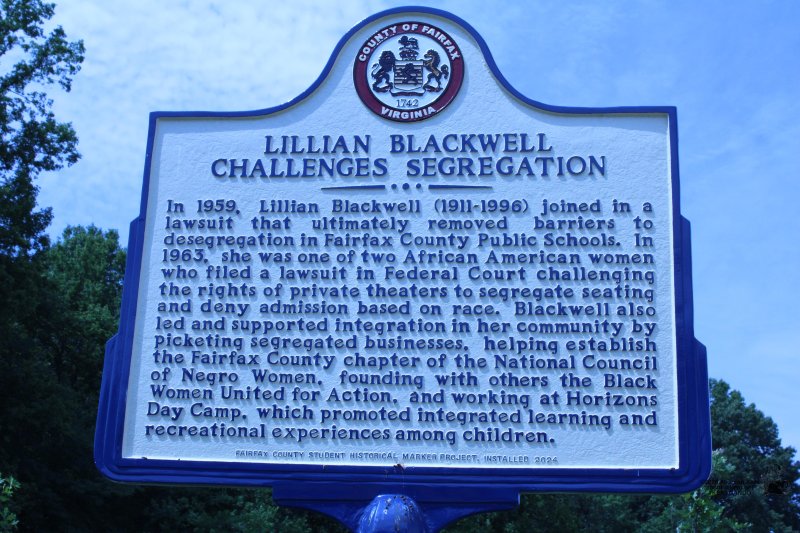
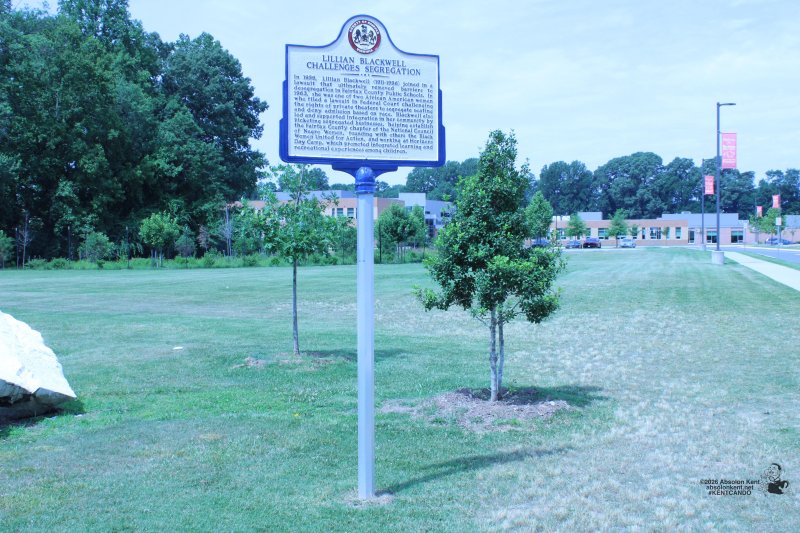
Lillian Blackwell Historical Marker

Lillian Blackwell Historical Marker

VIENNA, Va. —  Lillian Blackwell was a civil rights activist in Fairfax County who brought legal challenges against segregation in public accommodations and schools in Virginia. Her successful lawsuits helped compel the desegregation of public facilities, movie theaters, and public schools—a direct challenge to the Jim Crow system that governed daily life across Virginia.

A Fairfax County historical highway marker at Oakton High School honors Blackwell's courage and the lasting impact of her legal victories. She represents the often-unsung local activists whose courtroom battles helped turn the promises of the civil rights movement into tangible change at the community level.

📸: absolonkent.net/photogallery/index.php?/category/689


Sons and Daughters of Liberty Cemetery, Vienna

Sons and Daughters of Liberty Cemetery, Vienna

VIENNA, Va. — This historic African American cemetery on Orchard Street is one of two historic burial grounds in Fairfax County associated with the Sons and Daughters of Liberty, a Black fraternal and mutual aid society active during the post-Civil War era.

Organizations such as the Sons and Daughters of Liberty were essential institutions within Black communities across Virginia after emancipation, providing burial insurance, sick benefits, and a framework for community organization that helped fill the void created by exclusion from many white civic and religious institutions.

📸: absolonkent.net/photogallery/index.php?/category/693