My Annandale: Cat Janice Mural

My Annandale: Cat Janice Mural
ANNANDALE, Va. โ€” Annandale has long been home to talented artists and musicians, and few have touched hearts around the world like Cat Janice.

Born Catherine Ipsan the Annandale native was a singer-songwriter whose music inspired millions. After being diagnosed with a rare form of cancer, she released her final single,ย Dance Outta My Head, ensuring that all proceeds would support her young son. The song became a global sensation, reaching the top of the TikTok Billboard chart and introducing her remarkable story of love, courage, and resilience to audiences worldwide.

Today, her legacy is being celebrated in Annandale with a beautiful new mural on the side of the Annandale Watch & Clock building at 4221 Annandale Road. The mural depicts Cat singing into a microphone, surrounded by flowers she loved, a star-filled night sky, and the poignant lyric, "I see you in the stars now." The project was inspired by her husband, Kyle Higginbotham, and made possible with the support of her family and the local community.

The mural is more than public artโ€”it is a lasting tribute to an Annandale native whose music, strength, and generosity continue to inspire people around the world.


Civilian Conservation Corps (Colored) Camp Historical Marker

Civilian Conservation Corps (Colored) Camp Historical Marker

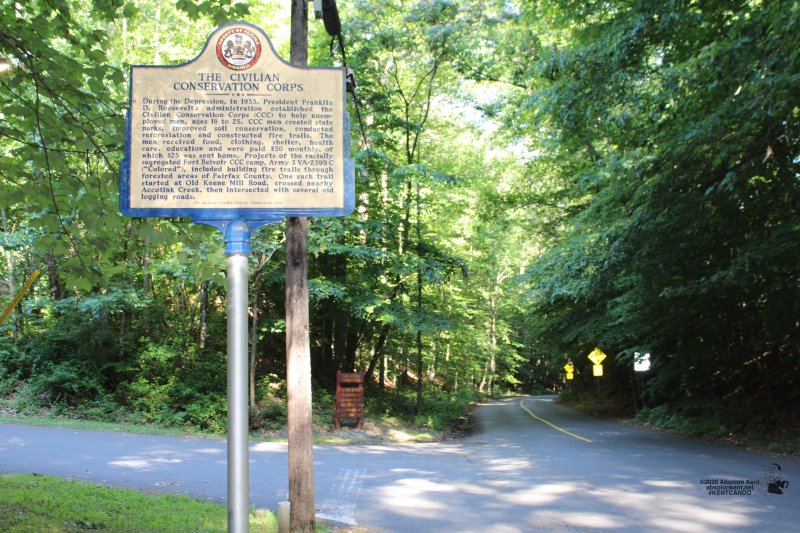
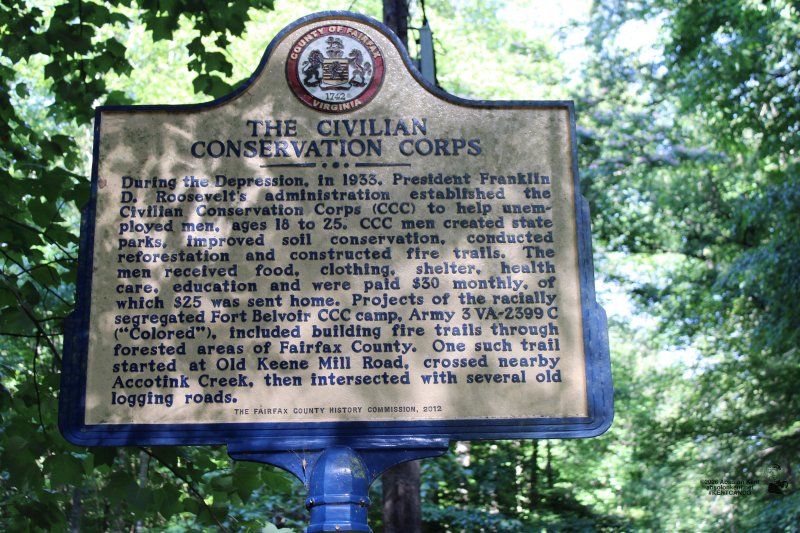
SPRINGFIELD, Va. โ€” During the New Deal era, the Civilian Conservation Corps established racially segregated camps across the South and border states. The Depression-era Colored CCC camp at Fort Belvoir (Army 3 VA-2399 C) was home to African American enrollees who constructed fire trails and other conservation infrastructure throughout Fairfax County's forests. Like all Colored CCC camps, the Fort Belvoir unit operated under federal segregation policies, reflecting the compromise that President Franklin D. Roosevelt made with Southern Democrats to secure passage of New Deal legislation.

Today, the Fairfax County historical highway marker near the Lake Accotink Park Headquarters building acknowledges both the labor contributions of these men and the discriminatory system under which they served.


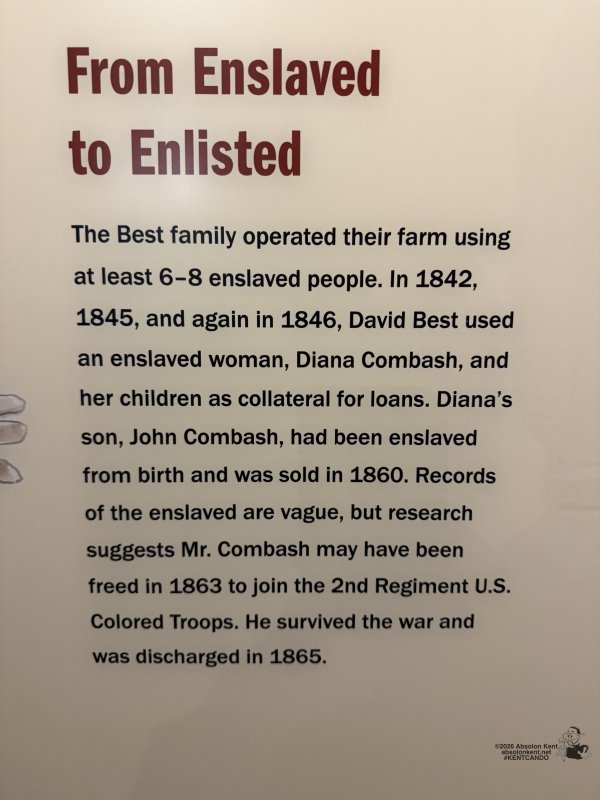
Monocacy National Battlefield

Monocacy National Battlefield
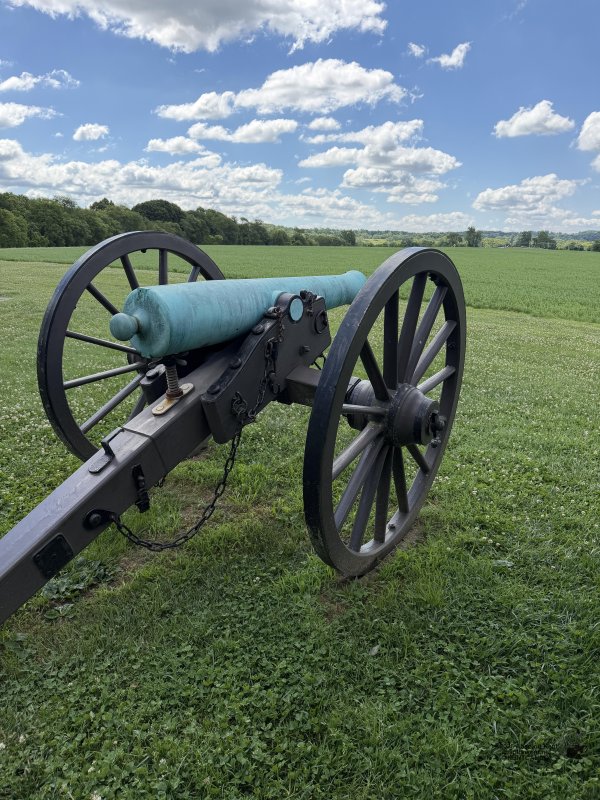
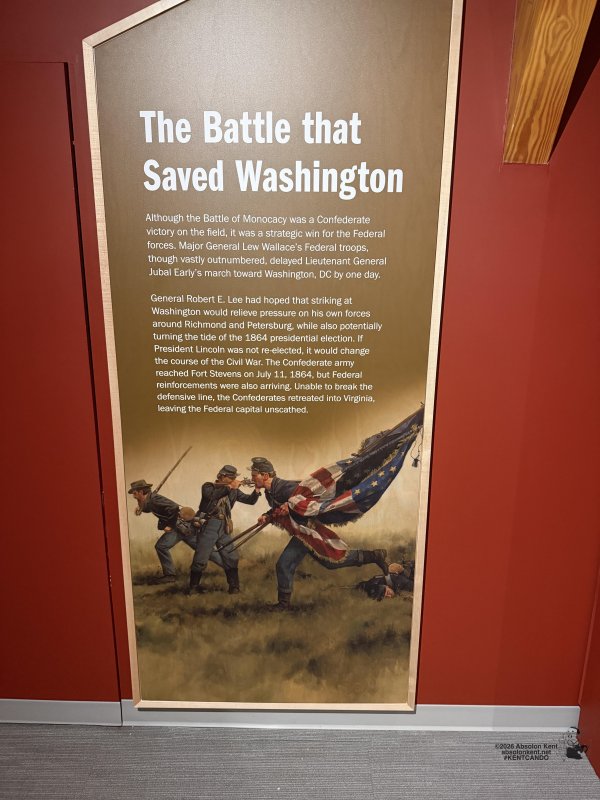
FREDERICK, Md. โ€” On July 9, 1864, Federal soldiers, although outnumbered three to one, fought gallantly along the banks of the Monocacy River to buy time for Union reinforcements to arrive in Washington, DC to defend the city from advancing Confederate forces. Because of their actions, the Battle of Monocacy is known as the โ€œBattle that Saved Washington.โ€
Designated as a National Military Park by Congress in 1934, Monocacy National Battlefield Park officially opened to the public in 1991.
 

Washington, DC at Night

Washington, DC at Night

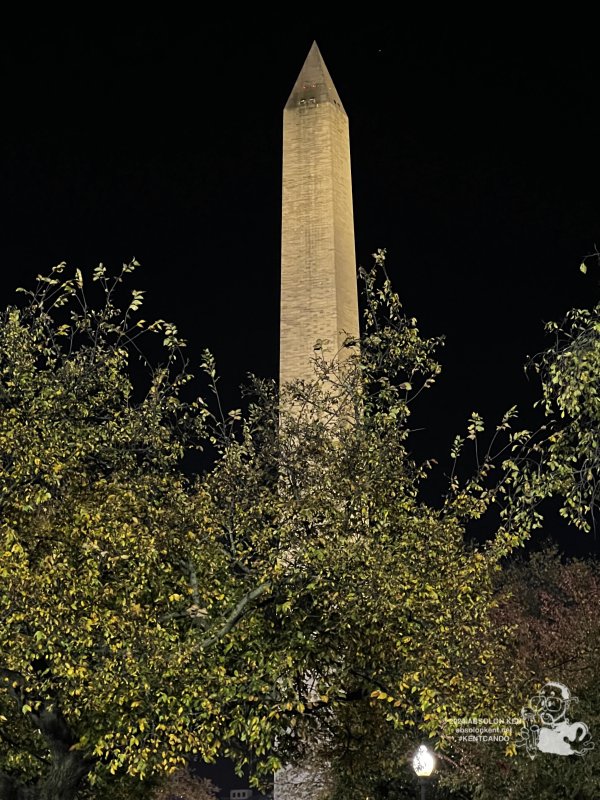
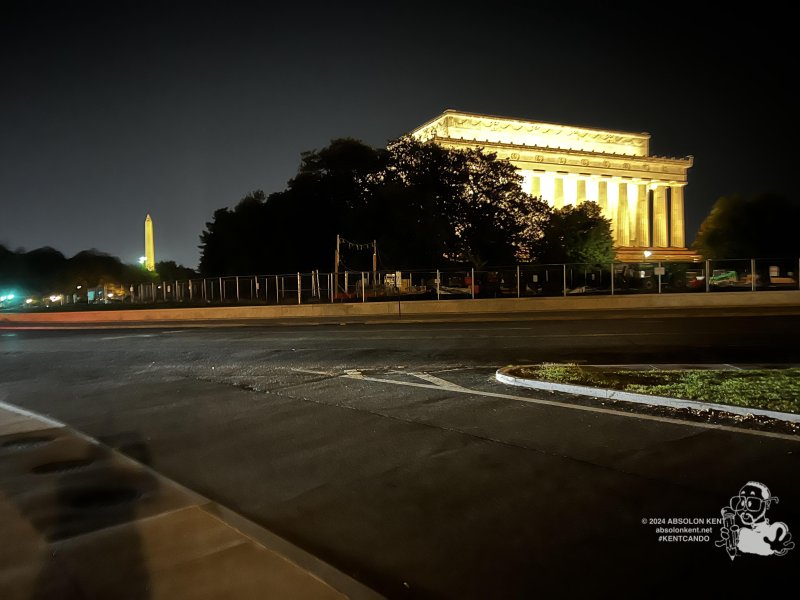
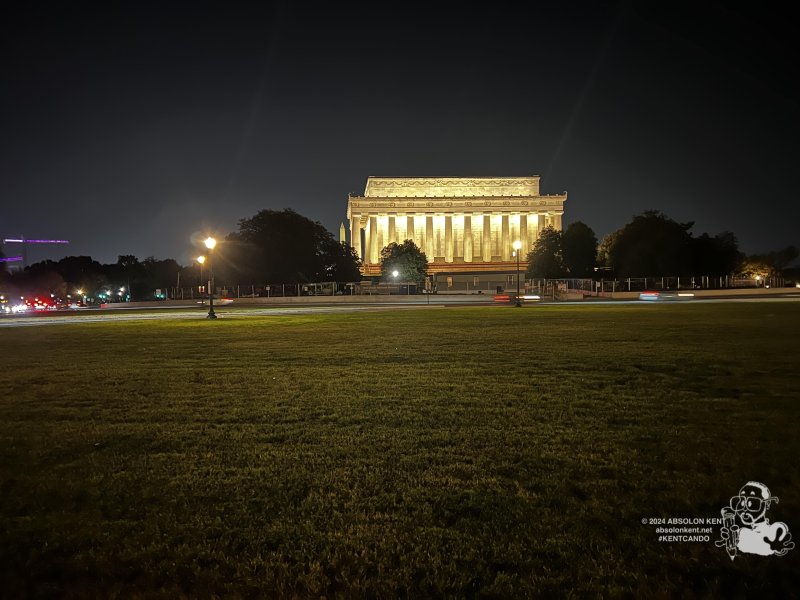
WASHINGTON โ€” Views of the Washington Monument and the Lincoln Memorial at Night along the National Mall.


Portici, Chinn Ridge, and Sudley at Manassas National Battlefield Park

Portici, Chinn Ridge, and Sudley at Manassas National Battlefield Park

MANASSAS, Va. โ€”ย The Manassas National Battlefield Park features several sites that chronicle the events and actions of the Civil War in and around the Manassas area.

Portici was the plantation house of Francis Lewis and served as the Confederate headquarters during the First Battle of Manassas. The surrounding grounds were the site of the 1861-1862 winter encampment for a brigade of Confederate troops. On Aug. 30, 1862, during the Second Battle of Manassas, Union cavalry stopped the Confederate cavalry as they sought to cut off the Union army's line of retreat.

Located on "Hazel Plain," the two-and-a-half-story frame farmhouse of Benjamin Chinn and his family overlooked the Warrenton Turnpike and Young's Branch. During both battles of Manassas, the plantation was engulfed by war and witnessed some of the heaviest fighting.

In 1860, the crossroads hamlet of Sudley Springs consisted of fewer than a dozen households but featured a prosperous mill, a prominent church, and a hotel for visitors attracted to the mineral waters of a nearby spring. During the Second Battle of Manassas, on Aug. 29, 1862, Federal troops repeatedly attacked Stonewall Jackson's left flank in this area, and only darkness prevented a fatal collapse of the Confederates. Today, only the Sudley Church remains as a testament to times past.