Gooding's Tavern Historical Marker

Gooding's Tavern Historical Marker

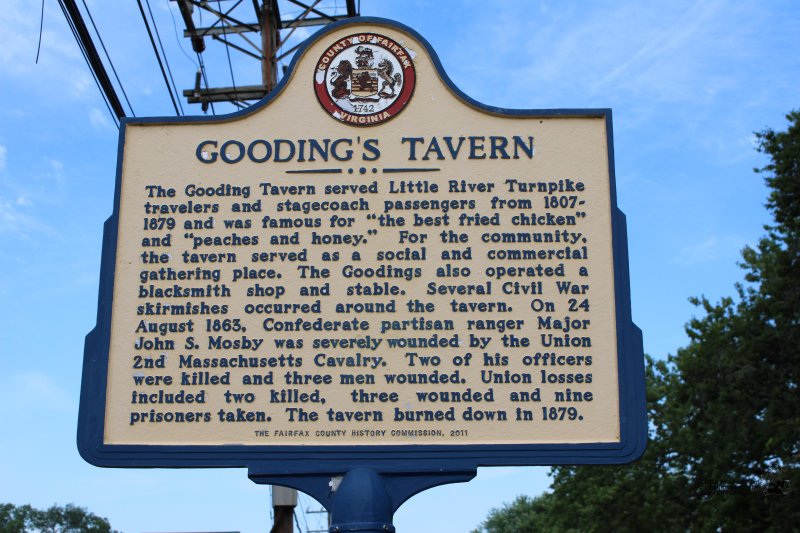
ANNANDALE, Va. โ€” Gooding's Tavern was operated by William Gooding Jr. (1768โ€“1861) from 1807 until his death, and by his heirs until the building burned in 1879. Known as the "ten-mile house" because it stood ten miles from Alexandria on the Little River Turnpike, the tavern was famous throughout Northern Virginia for its fried chicken, peaches, and honey and served as a social, commercial, and postal gathering place for the surrounding community. The Goodings also operated a blacksmith shop and stable across the road. The tavern and the surrounding 2,100-acre property were sustained by the labor of enslaved people, and the site's African American heritage is directly connected to the community that later grew from it.

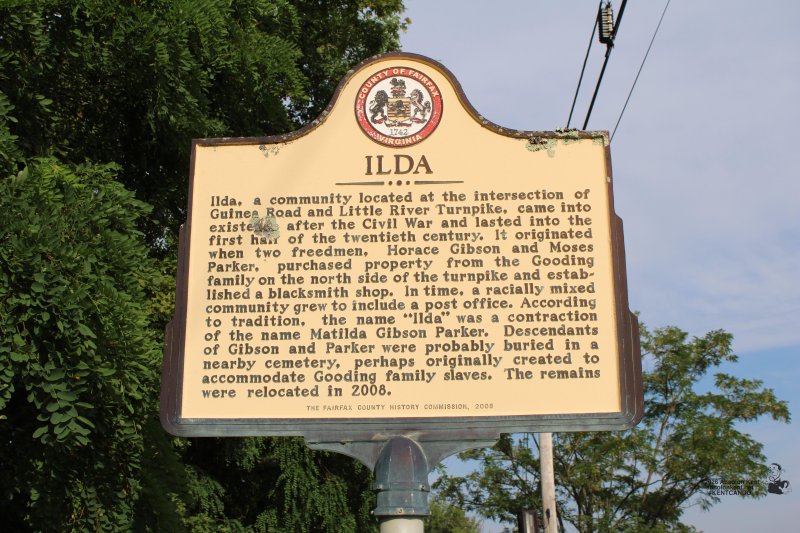
After the Civil War, Gooding's heirs sold parcels of land to freedpeople, enabling the founding of Ilda, a racially integrated community established by formerly enslaved blacksmiths Horace Gibson and Moses Parker near the intersection of Little River Turnpike and Guinea Road.

A Fairfax County History Commission marker commemorating Gooding's Tavern was erected in 2011 and stands just outside the boundaries of Pleasant Valley Memorial Park, across Little River Turnpike from the Northern Virginia Community College Annandale Campus.

๐Ÿ“ธ: absolonkent.net/photogallery/index.php?/category/695ย 


Ilda — A Racially Mixed Freedmen's Community

Ilda — A Racially Mixed Freedmen's Community

ANNANDALE, Va. โ€” Ilda, a racially integrated community took root in 1868 when Horace Gibson, a formerly enslaved blacksmith from Culpeper, purchased five acres at the intersection of Little River Turnpike and Guinea Road from the Gooding family and opened a blacksmith and wheelwright shop with his business partner, Moses Parker โ€” also formerly enslaved. Among the rarest examples in the post-Civil War South of a Black-owned business anchoring a mixed-race settlement, their shop's prime location on the well-traveled turnpike made it the cornerstone of a community that grew to include roughly 40 to 50 families at its height in the 1890s.

The settlement's name was a contraction of "Matilda Gibson Parker," Horace Gibson's daughter, who later took over the blacksmith shop with her husband, Moses Parker's son, and ran it until 1910. By the late 1800s, Gibson and Parker together owned more than 400 acres, and Ilda became one of the rare post-Civil War communities anchored by a Black-owned business that also drew white residents and patrons.

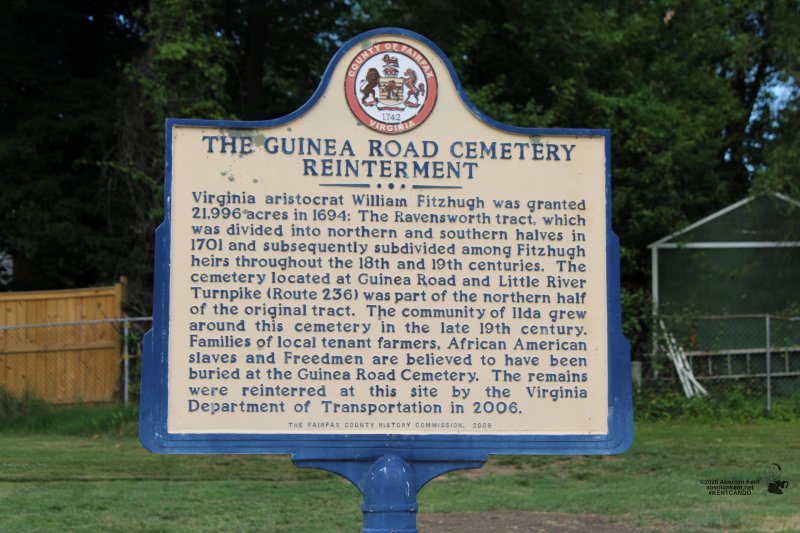
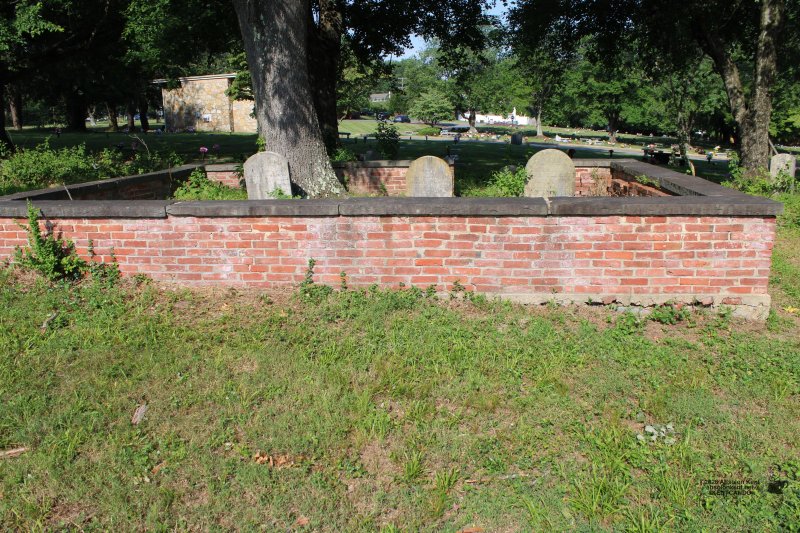
A cemetery near the crossroads held the remains of Gibson and Parker descendants, as well as people enslaved by the Gooding family; the graves were rediscovered during road-widening plans and relocated to Pleasant Valley Memorial Park in 2006 after a decades-long campaign by descendant Dennis Howard.

Ilda disappeared from the map by 1950, when the whites-only Lee Forest subdivision was built over much of the original settlement. Today, a Virginia historical marker and a small cross at the old cemetery site are the only physical traces remaining.

๐Ÿ“ธ: absolonkent.net/photogallery/index.php?/category/687


Sons & Daughters of Liberty Cemetery

Sons & Daughters of Liberty Cemetery

ANNANDALE, Va. โ€” Tucked away inside Annandaleโ€™s Pine Ridge Park lies the last remnant of a historic African American community, the Sons & Daughters of Liberty Cemetery. This cemetery is all that remains of "The Pines"โ€”a thriving neighborhood founded in the early 1900s by Black families who cleared forests, built homes, and ran local businesses. One of its founders, Spanish-American War veteran William Collins Sr., actually used his military wages to buy the community's first 22 acres. In 1907, a quarter-acre was set aside by a local Black fraternal lodge to ensure a dignified resting place for residents and veterans.

Tragically, in 1964, the county used eminent domain to evict the families and bulldoze the neighborhood for a school that was never built. The land eventually became a county park, and the cemetery was left forgotten for decades.

An archaeological survey later uncovered more than 50 graves, though nearly all the original headstones were lost to time and vandalism. Today, a protective fence and an official historical marker honor the endurance and legacy of the families of The Pines.

๐Ÿ“ธ: absolonkent.net/photogallery/index.php?/category/684

ย  ย 


The Gathering: Every Nation in Worship

The Gathering: Every Nation in Worship

ANNANDALE, Va. โ€” What an incredible evening of praise and worship as the Gospel Choir, Korean Ministry praise team, and Spirit and Truth praise team of Capital Baptist Church joined the praise team of Iglesias Capital to present "The Gathering: Every Nation in Worship"โ€”a powerful celebration of music, song, prayer, and unity in Christ.


VA HB478 Signing

VA HB478 Signing

RICHMOND, Va. โ€” I am incredibly proud of Matthias, his classmates, and Mrs. Annie Ray for having the opportunity to meet Virginia Governor Abigail Spanberger as she signed HB478 into law yesterday.

This achievement would not have been possible without the passion, creativity, hard work, and dedication of Mrs. Ray and the students who helped inspire this legislation. Thanks to their efforts, Virginia will now recognize fine arts achievement with a special diploma seal and acknowledge fine arts as a high-demand career field.

A special thank-you to Delegate Vivian Watts, the sponsor of HB478, for championing this important legislation and supporting expanded opportunities for students in fine arts education across the Commonwealth.

Their voices, talents, and creativity are helping shape the future, and I could not be a prouder parent or supporter of Annandale High School.

๐Ÿ“ธ: Photo provided by Annie Ray